


Where does the money go?
The ideal percentage of your paycheck that should go towards savings, housing, and debt varies depending on individual circumstances, financial goals, and location. However, there are some general guidelines that can be helpful. How do you align with these rules of thumb?
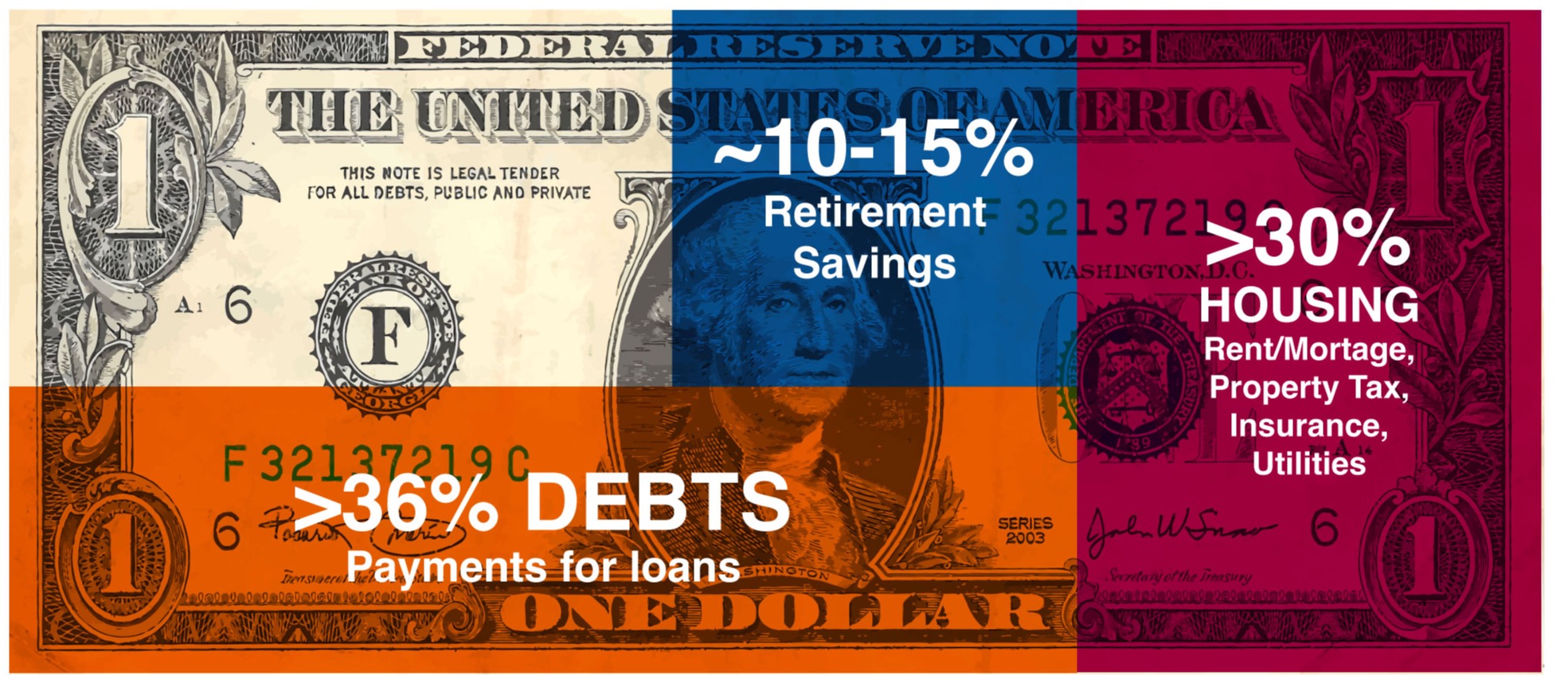
SAVINGS:
- Emergency fund:
Aim to save 3-6 months' worth of living expenses in an easily accessible account.
- Retirement:
Contribute at least enough to your employer-sponsored retirement plan to get the full company match, and consider contributing 10-15% of your pre-tax income towards retirement.
DEBT AND HOUSING:
- The 30% rule:
A common rule of thumb is to spend no more than 30% of your gross income on housing costs, including rent or mortgage payments, property taxes, insurance, and utilities.
- The 28/36 rule:
Another general rule is to spend no more than 28% of your gross income on housing costs and no more than 36% on total debt payments, including housing costs, student loans, and car loans.
WHAT DO I NEED FOR A BALANCED FINANCIAL PLAN?
- List your financial goals. You need to know what your goals are if want to achieve them. Be sure your goals are attainable, otherwise you’re setting yourself up for failure. Prioritize them and break down larger more general goals into smaller goals you can accomplish step by step.
- Create a budget. Before you can make a game plan for what you should be spending, you need to know exactly how much you’re currently spending. In order to find out what your current financial situation really looks like, you’ll need to review all your bank statements and receipts. Be sure not to leave anything out, omitting information only hurts you.
- Plan for emergencies. Most people will claim to understand the importance of planning for emergencies, but few actually have a fully-funded emergency account. When you don’t plan for the unexpected, you can end up sabotaging your long-term savings goals.
- Don’t forget about Uncle Sam. Taxes are often overlooked when creating a financial plan and personal budget. Remember to include taxes in your financial plan projections to help avoid insufficient funds.
- Keep tabs on your plan. Creating a financial plan is not a one time, “set it and forget it” tool. You have to make sure that you are reviewing your plan on a regular basis or whenever you go through a major life change so you can make any necessary adjustments.
- Work with a professional. A financial advisor will be able to review your situation, your current investments, and make recommendations on how you can best achieve your goals. It is helpful to get an outside opinion to check whether you are on track!
For specific advice for your unique situation, meet with a financial advisor. We would love to chat with you about where you are and how we can help!